Description
In 2026, the choice between Microsoft Office 2024 and Google Workspace represents a fundamental decision between two distinct philosophies: owning your software outright versus subscribing to a constantly evolving cloud platform. While Microsoft Office 2024 offers a traditional, offline-first experience with a single upfront cost, Google Workspace provides a strictly online, collaborative suite updated continuously. This comparison dissects their current capabilities to help individuals and businesses decide which model fits their workflow.
Microsoft Office 2024
Released in late 2024, Microsoft Office 2024 is the current perpetual-license version of the classic suite. Unlike Microsoft 365, this product does not require a monthly subscription. You pay a single fee to install the software on one computer, and it remains functional indefinitely without mandatory internet check-ins. It is designed specifically for Windows 10 and Windows 11 users who prefer a static, reliable environment over constant feature updates.
- One-Time Purchase: You pay once (approximately $149.99 for Home, $249.99 for Home & Business) and own the license forever.
- Offline Reliability: The applications run entirely on your local hardware, ensuring full functionality without an internet connection.
- Feature Set: Includes the 2024 versions of Word, Excel, PowerPoint, and OneNote. The Home & Business edition adds Outlook and commercial use rights.
- Advanced Data Analysis: Excel 2024 includes new capabilities like Dynamic Arrays and image functions that outperform web-based alternatives for heavy data processing.
Best suited for: Individuals and small businesses who strictly avoid subscriptions, work primarily offline, or require the maximum formatting precision of desktop applications.
Google Workspace
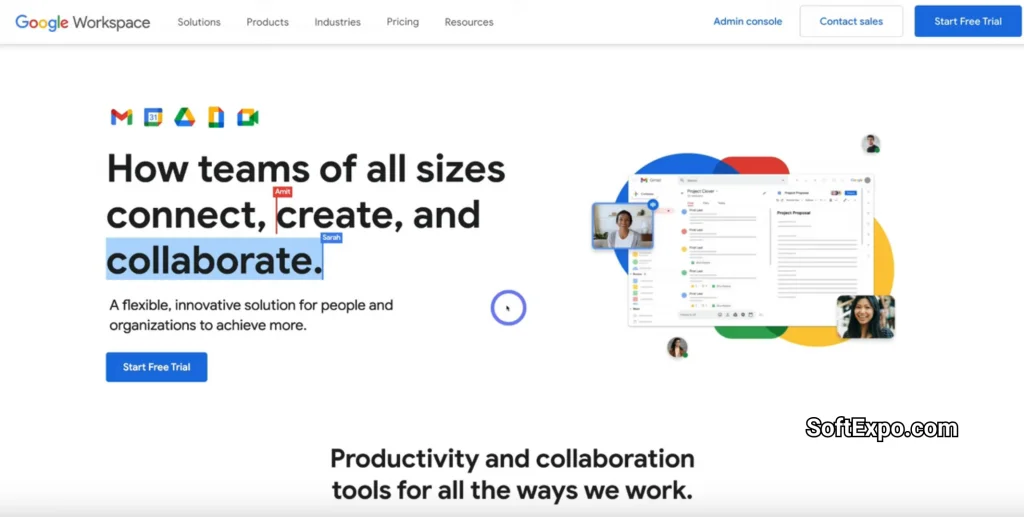
Google Workspace continues to dominate the cloud-productivity market in 2026. It operates on a subscription-only model, where businesses pay per user, per month. The suite is entirely browser-based, meaning there is no software to install or patch. Updates are pushed automatically by Google, ensuring every user is always on the exact same version. It integrates heavily with Gemini, Google's AI, to assist with drafting emails, organizing data, and generating images within slides.
- Cloud-First Architecture: All files live in the cloud by default, allowing access from any browser without file transfers.
- Real-Time Collaboration: Multiple users can edit the same document simultaneously with zero latency, a standard that local desktop apps struggle to match.
- Pricing Structure: Plans range from a free personal version to Business tiers starting around $7.20/user/month (Business Starter) up to $21.60/user/month (Business Plus).
- Integrated AI: Higher-tier plans now include Gemini features directly in Docs and Sheets to automate content creation and analysis.
Best suited for: Teams that prioritize speed and collaboration over advanced formatting, and organizations that want to eliminate software maintenance.
Key Differences
Payment and Ownership
The most distinct difference lies in the financial commitment. Microsoft Office 2024 is a capital expense; you pay ~$150-$250 once, and the software is yours for its lifecycle (typically 5 years of support). Google Workspace is an operating expense; you pay a recurring monthly fee forever. If you stop paying for Workspace, you lose the ability to edit your proprietary files, whereas Office 2024 functions as long as your hardware supports it.
Feature Evolution vs. Stability
Microsoft Office 2024 is a "locked-in-time" release. It will not receive new features after you buy it—only security patches. This is ideal for users who dislike interface changes disrupting their workflow. Google Workspace is fluid; menus change, and new tools appear automatically. For example, while Excel 2024's feature set is static, Google Sheets frequently gains new formulas and AI integrations without user intervention.
AI and Cloud Capabilities
Google Workspace is built around connectivity. Its AI features (Gemini) are embedded into the daily workflow for paid users, helping summarize emails or write drafts. Microsoft Office 2024 strictly excludes these cloud-based AI tools. It does not include Copilot, nor does it include the 1TB of cloud storage found in subscription plans. It is a strictly traditional toolset.
Which Should You Choose?
Choose Microsoft Office 2024 if you...
Require the deep, highly responsive feature set of desktop Excel and PowerPoint. It is the correct choice if you demand a one-time payment structure and want to ensure your software environment remains unchanged for years. It is also the only option for strictly offline workstations running Windows 10 or 11.
Choose Google Workspace if you...
Need to coordinate with a team in real-time. If your work involves co-authoring documents, quick feedback loops, or if you want access to the latest AI writing assistants, the subscription cost is justified by the efficiency gains in communication and file management.

Best Backup Solutions For Small Business

Best Tools For 3D Animation